01
Specific Strength
Amorphous metal provides high specific strength, helping components achieve lightweight design while maintaining excellent structural stability and long-term durability.

Amorphous metal combines lightweight performance with exceptional hardness. Its hardness surpasses traditional materials and can be about three times harder than 316L stainless steel and grade 5 titanium, effectively resisting daily scratches and helping precision parts maintain a new appearance over time.
With high elasticity and high strength, amorphous alloys are tough and impact resistant. They can absorb more impact energy without deformation, offering safer and more reliable performance than brittle materials in demanding applications.
The comparison below shows representative performance differences between amorphous metal and common engineering materials such as aluminum alloy, stainless steel and titanium alloy.
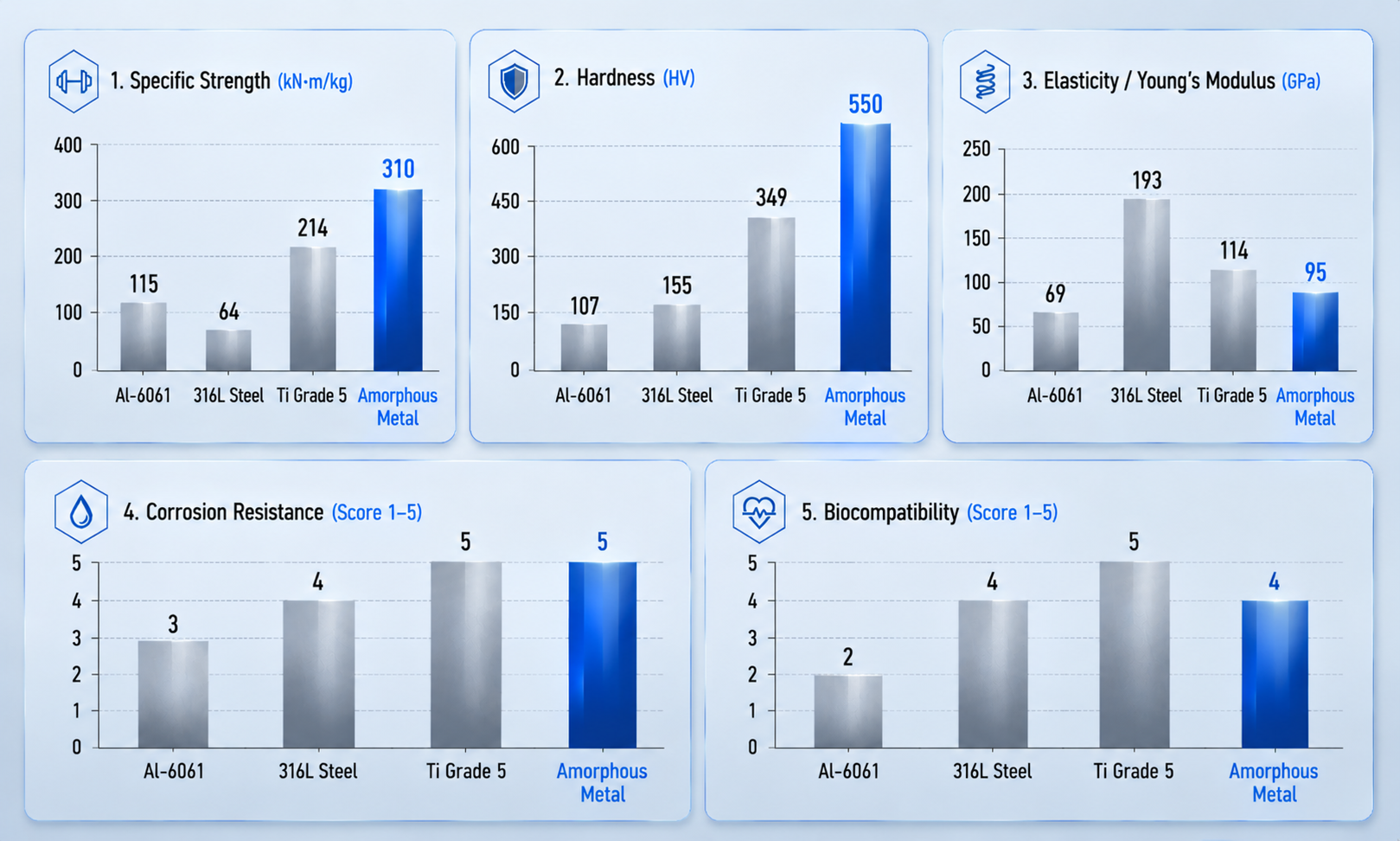
Amorphous metal provides high specific strength, helping components achieve lightweight design while maintaining excellent structural stability and long-term durability.
Its hardness surpasses many traditional materials, helping resist daily scratches, surface wear and deformation while keeping precision parts looking new for long-term use.
With high elasticity and excellent impact resistance, amorphous alloys can absorb more impact energy without deformation, improving reliability in demanding applications.
Amorphous alloys offer outstanding corrosion resistance, unique metallic luster and a warm, smooth touch, supporting long-term use in harsh environments and premium products.
Amorphous metal is highly bioinert, does not leach out and resists corrosion from body fluids, meeting requirements for medical implants and minimally invasive devices.
Amorphous Metal values are represented by typical zirconium-based bulk metallic glass benchmarks.
Actual performance may vary by grade and process.